Last week I had some time to go out with the family to take a few photos by Dows Lake with what was left of the tulips. It was late in the evening with a setting sun casting a wonderful golden light on us and the surroundings. This of course is the golden hour for photography, and the best kind of light for portraits and landscape photography. It is my preferred time of day to shoot in, but of course you need to know how to use it to your advantage and how to balance the light on your subject and the background. So I thought I would write up this post to explain how I handled the light with the two examples below.
In this first shot I wanted to get the tulips in the background to give me some colour, but I wanted them out of focus so that your eye is instantly drawn towards the subject, my daughter. Using my 85mm f/1.2 lens I could have completely opened up the aperture (f/1.2) to really blur the background (see my aperture tutorial for more info on how this works) but since I was fairly close to her I knew that if I did that very little of my daughter would be in focus as well. I therefore decided to stop down to f/3.5 since in my experience with that lens it gives me a suitable amount of depth of field, while still producing a very pleasing bokeh (blurred background). With my subject standing in open shade there was still a decent amount of light available so that I used ISO 100 to give me the cleanest photo with no grain, while still giving me fast enough shutter speeds. With aperture and ISO settings selected I metered the background to give me a correct exposure shutter speed value of 1/320th sec. To provide a bit more contrast in the subject's face I also setup an off camera flash in high-speed sync mode to the my left, which was in the same direction of the indirect sunlight. To match the colour of the setting sun and warm up the colour of the flash I covered it with a 3/4 CTO gel, and set my camera's white balance to 4600K to keep some of the warm orange tones. Other than converting the camera output from RAW to jpg, this shot is basically straight out of the camera with no added post processing.
Exif Data
Camera: Canon 5D mkII
Aperture: f/3.5
Exposure: 1/320
Focal Length: 85mm
Flash: Fired off camera
ISO: 100
Post processing included conversion from RAW
The second shot has a somewhat similar setup. I needed more depth of field since there are three people in the shot, so I stopped down to f/5.0 giving me a very sharp focus for all the girls, yet still slightly blurring the background. The sun in this shot was coming in from behind the subjects giving a very nice rim lighting, so I needed to expose for the background (shutter speed of 1/320 @ 100 ISO) and use my flash to bring the girls back from becoming silhouettes. The flash was setup on my right, and I again used a 3/4 CTO gel to match the golden sunset colour and high-speed sync. White balance was again set to 4600K to keep some of those warm tones. Other than converting the camera output from RAW to jpg, this shot is also basically straight out of the camera with no added post processing.
Exif Data
Camera: Canon 5D mkII
Aperture: f/5.0
Exposure: 1/320
Focal Length: 85mm
Flash: Fired off camera
ISO: 100
Post processing included conversion from RAW
Welcome
Welcome to my photoblog. I try to keep it updated daily with a new photo from either my personal or professional life. It is not intended to be taken as my professional portfolio (please visit the main website for that), but instead it is more of an informal and fun way for me to share some of my personality and creativity with you. Many of the photos on my blog are available for purchase as fine art prints, please visit the main website and/or contact me if you are interested. Enjoy!
Showing posts with label Tips. Show all posts
Friday, May 31, 2013
Tuesday, March 13, 2012
Looking For A Wedding Photographer?
Finding The "Right" Photographer For Your Wedding
Many people often wonder: how do I find a photojournalistic wedding photographer who is professional, friendly, and talented at capturing moments. Sometimes more importantly, how do I find such a wedding photographer who has rates that are reasonable? The great news is that Fernando Matias Photography is a company operated by a professional photographer who specializes in wedding photography within the Ottawa area, and is ready to help you address these questions.
Speaking from experience, most people ultimately find a wedding photographer from a direct referral. In other words, people talk to others who have recently hired a wedding photographer and are provided with information that they then use to figure out who to hire for their needs. This is a great way to go, and in fact most of our business is obtained through direct referrals from previous clients. However, the Internet has now also changed this. You now have the power to find a professional photographer who specializes in Ottawa wedding photography by a simple web search. If you have not been directly referred to us by a previous happy customer already, we at Fernando Matias Photography would be happy to provide you with past testimonials from clients who can vouch for our passion and quality.
Experience Matters
There are several things you will want to keep in mind prior to making a decision. First, you will want to make sure that the photographer you are considering has been proven in the past. Your photographer should have a portfolio that you can browse, both in person and online. In addition, it's also important to find someone who specializes in wedding photography in your area. Capturing moments in the city that look just right is a skill that is acquired over time, and knowing which locations work and which do not will save you valuable time on an already overwhelmingly busy day. You want the very best wedding photographer for that special day in your life. Sure, the bottom line is important and wedding budgets are made for a reason. However, budget accordingly and remember that your wedding day photographs are memories that you want to last a lifetime. You won’t have another opportunity for these photos to be taken and cutting back on your photography funds can end up hurting you in the end.
The Bottom Line
The bottom line should be "Is this the right photographer for us?" and although the cost is important, it should not be your only point of reference when comparing photographers. A quick search will show that there is a huge range in wedding photography rates, from dirt cheap all the way to the insanely expensive. In most cases the photographer's rate is directly related to how much experience they have, and therefore a photographer that gives you a questionably low quote is usually very inexperienced and/or they will not give your wedding the attention it deserves. At Fernando Matias Photography we have limits on how many events we will accept in any given month so that we can be sure to provide 100% of our attention to your event.
Style
It is also important to speak with the photographer to make sure that your vision of the special day matches what the photographer is able to provide. Each photographer has their own style, and essentially this style is what you are hiring them for. If a photographer shoots entirely in black and white, and you want a mix of colour and monotone shots in your images then maybe they are not the right photographer for you. Find a photographer whose style matches your needs and then you’ll be assured that you get the photos you want. At Fernando Matias Photography our style is more photojournalistic with a strong emphasis on all the little details, and also plenty of candids. We know that posed photos are also an important part of your day for group photos and more formal shots of the newlyweds, and we'll not only do our best to show you how to pose so that you look your best but we also make formal photos fun!
Two Photographers Are Better Than One
There are many benefits to hiring two photographers for your wedding day. A single photographer can only be in one place at any given time and if you want photos of both the bride and groom getting ready it is very rare that they will both be in the same place at the same time. With two photographers one can dedicate their time to be with the bride as she is getting ready, while the other can focus on the groom. A single photographer will likely need to drive back and forth and miss once in a lifetime moments in your special day. If a photographer does offer you a second shooter, make sure that this person is also another professional photographer and not just an assistant or student. It is for these reasons and more that at Fernando Matias Photography our full day wedding packages provide two professional photographers to cover all of your wedding moments, the second being from Jeffrey Meyer Photography.
Communication
Communication between you and the photographer is very important for a successful day. You should always be able to contact your photographer and have your questions addressed quickly. The great news about working with a professional photographer from Fernando Matias Photography is that you will have your questions answered in a timely manner. This is important because once you make a decision as to which photographer to use, you don't want to find yourself constantly waiting to get answers to your important questions.
Contracts
The photographer you choose should provide you with a signed contract. This contract not only protects the photographer, but will also give you, the client, the security you need to make sure you obtain everything you were promised and in a timely fashion. The contract should stipulate exactly what you are required to pay in total, as well as exactly what you will receive for this fee. It is for these reasons, and many more, that at Fernando Matias Photography we always provide a full contract for every job we do.
Is Fernando Matias Photography the right photographer for you? Only you can decide, but we will do everything we can to earn your business. Do you have any comments or questions regarding what to look for in a wedding photographer? Feel free to ask us using the comments section below or by emailing us directly using our contact page and we will give you a frank and open answer.
Many people often wonder: how do I find a photojournalistic wedding photographer who is professional, friendly, and talented at capturing moments. Sometimes more importantly, how do I find such a wedding photographer who has rates that are reasonable? The great news is that Fernando Matias Photography is a company operated by a professional photographer who specializes in wedding photography within the Ottawa area, and is ready to help you address these questions.
Speaking from experience, most people ultimately find a wedding photographer from a direct referral. In other words, people talk to others who have recently hired a wedding photographer and are provided with information that they then use to figure out who to hire for their needs. This is a great way to go, and in fact most of our business is obtained through direct referrals from previous clients. However, the Internet has now also changed this. You now have the power to find a professional photographer who specializes in Ottawa wedding photography by a simple web search. If you have not been directly referred to us by a previous happy customer already, we at Fernando Matias Photography would be happy to provide you with past testimonials from clients who can vouch for our passion and quality.
Experience Matters
There are several things you will want to keep in mind prior to making a decision. First, you will want to make sure that the photographer you are considering has been proven in the past. Your photographer should have a portfolio that you can browse, both in person and online. In addition, it's also important to find someone who specializes in wedding photography in your area. Capturing moments in the city that look just right is a skill that is acquired over time, and knowing which locations work and which do not will save you valuable time on an already overwhelmingly busy day. You want the very best wedding photographer for that special day in your life. Sure, the bottom line is important and wedding budgets are made for a reason. However, budget accordingly and remember that your wedding day photographs are memories that you want to last a lifetime. You won’t have another opportunity for these photos to be taken and cutting back on your photography funds can end up hurting you in the end.
The Bottom Line
The bottom line should be "Is this the right photographer for us?" and although the cost is important, it should not be your only point of reference when comparing photographers. A quick search will show that there is a huge range in wedding photography rates, from dirt cheap all the way to the insanely expensive. In most cases the photographer's rate is directly related to how much experience they have, and therefore a photographer that gives you a questionably low quote is usually very inexperienced and/or they will not give your wedding the attention it deserves. At Fernando Matias Photography we have limits on how many events we will accept in any given month so that we can be sure to provide 100% of our attention to your event.
Style
It is also important to speak with the photographer to make sure that your vision of the special day matches what the photographer is able to provide. Each photographer has their own style, and essentially this style is what you are hiring them for. If a photographer shoots entirely in black and white, and you want a mix of colour and monotone shots in your images then maybe they are not the right photographer for you. Find a photographer whose style matches your needs and then you’ll be assured that you get the photos you want. At Fernando Matias Photography our style is more photojournalistic with a strong emphasis on all the little details, and also plenty of candids. We know that posed photos are also an important part of your day for group photos and more formal shots of the newlyweds, and we'll not only do our best to show you how to pose so that you look your best but we also make formal photos fun!
Two Photographers Are Better Than One
There are many benefits to hiring two photographers for your wedding day. A single photographer can only be in one place at any given time and if you want photos of both the bride and groom getting ready it is very rare that they will both be in the same place at the same time. With two photographers one can dedicate their time to be with the bride as she is getting ready, while the other can focus on the groom. A single photographer will likely need to drive back and forth and miss once in a lifetime moments in your special day. If a photographer does offer you a second shooter, make sure that this person is also another professional photographer and not just an assistant or student. It is for these reasons and more that at Fernando Matias Photography our full day wedding packages provide two professional photographers to cover all of your wedding moments, the second being from Jeffrey Meyer Photography.
Communication
Communication between you and the photographer is very important for a successful day. You should always be able to contact your photographer and have your questions addressed quickly. The great news about working with a professional photographer from Fernando Matias Photography is that you will have your questions answered in a timely manner. This is important because once you make a decision as to which photographer to use, you don't want to find yourself constantly waiting to get answers to your important questions.
Contracts
The photographer you choose should provide you with a signed contract. This contract not only protects the photographer, but will also give you, the client, the security you need to make sure you obtain everything you were promised and in a timely fashion. The contract should stipulate exactly what you are required to pay in total, as well as exactly what you will receive for this fee. It is for these reasons, and many more, that at Fernando Matias Photography we always provide a full contract for every job we do.
Is Fernando Matias Photography the right photographer for you? Only you can decide, but we will do everything we can to earn your business. Do you have any comments or questions regarding what to look for in a wedding photographer? Feel free to ask us using the comments section below or by emailing us directly using our contact page and we will give you a frank and open answer.
Monday, March 12, 2012
Hippos - Depth of Field Tutorial
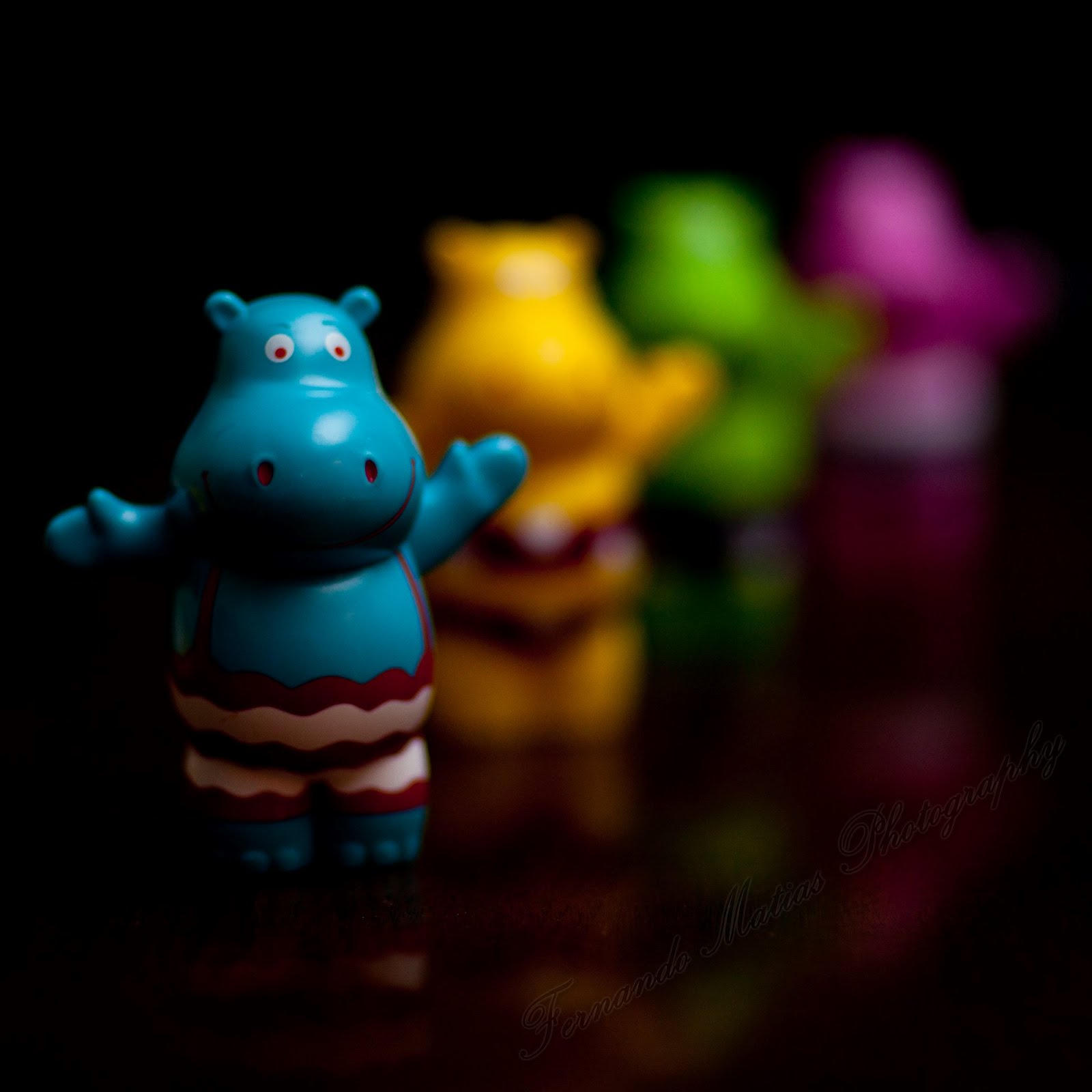
Today's shots for the "Photo a Day" project are called Hippos, and I'll be using them to explain a photography term called Depth Of Field.


Whenever people find out that I am a photographer, usually their first question is "What camera should I buy?". I'm not going to answer that question today, but rather I'll try to shed some light on two of the other more popular questions "How do I make my shot's background all blurry?" and "How do I get everything in my shot in focus?".
One simple answer to both questions has to do with Depth of Field (DOF), and we can control the DOF with the camera's aperture setting. The aperture is a diaphragm (think of it as a hole) within the lens that opens and closes to various sizes to let more or less light through to the camera's sensor. Because of some light physics that I am not going to explain here, the aperture also affects the DOF in that a smaller aperture (hole) gives you more DOF (more in focus) and a larger aperture gives you less DOF (more blur).

Lens aperture values are denoted by a "f/" followed by a number (eg. f/2.8). You may have noticed this in my Exif info that I post for each photo of the day. In a slightly strange backwards kind of way, a large aperture (large hole) has a small f/ number, and the number gets bigger as you get a smaller aperture (smaller hole). You can see some examples of this in the figure above. Using the maximum aperture on your lens is called shooting wide open. That is when you have your aperture fully open to let in the most light it can, and it will also produce the least DOF (blurry background). Closing the aperture on the lens is known as stopping down the lens and it will increase the DOF but at a cost of reducing the amount of light.
As you can see in my example Hippo shots above, when you shoot wide open with an aperture of f/1.2 (first shot) you get a very shallow DOF where only the blue hippo's nose is in focus and even his eyes are slightly out of focus. All the other hippos are a complete blur! As you increase the aperture value (f/3.5, second shot) you are decreasing the size of the hole it creates, and you are increasing the DOF to now include the entire blue hippo, but the other hippos are still blurry. Increasing the aperture even more to f/7.1 (third shot) starts to bring the yellow hippo into focus, but it takes a very small hole (f/16.0, fourth shot) to really bring almost all of the hippos into focus.
There are of course other factors that will affect this such as focal length (zoom) and how close you are to the subject. To keep this brief I'll just say this: The longer the focal length (more zoom) the smaller your DOF will be, the wider your focal length (wide angle) the more DOF; The closer you are to the subject the smaller your DOF, and the further from the subject the greater the DOF.
So the next time you want a blurry background just remember to use your maximum aperture (smallest f/ number), and when you want everything in focus use a smaller aperture (largest f/ number).
Do you have any comments or questions about this? Feel free to ask us using the comments section below or by emailing us directly using our contact page.
Exif Data
Camera: Canon 5D mkII
Aperture: f/1.2, 3.5, 7.1, 16.0
Exposure: 1/200
Focal Length: 85mm
Flash: Fired Off Camera E-TTL
ISO: 800
Flash Cord
Tripods
Post processing included conversion from RAW, and cropped
Aperture Diagram borrowed from: http://petphotographytips.wordpress.com/2011/05/24/what-is-an-fstop/


Whenever people find out that I am a photographer, usually their first question is "What camera should I buy?". I'm not going to answer that question today, but rather I'll try to shed some light on two of the other more popular questions "How do I make my shot's background all blurry?" and "How do I get everything in my shot in focus?".
One simple answer to both questions has to do with Depth of Field (DOF), and we can control the DOF with the camera's aperture setting. The aperture is a diaphragm (think of it as a hole) within the lens that opens and closes to various sizes to let more or less light through to the camera's sensor. Because of some light physics that I am not going to explain here, the aperture also affects the DOF in that a smaller aperture (hole) gives you more DOF (more in focus) and a larger aperture gives you less DOF (more blur).

Lens aperture values are denoted by a "f/" followed by a number (eg. f/2.8). You may have noticed this in my Exif info that I post for each photo of the day. In a slightly strange backwards kind of way, a large aperture (large hole) has a small f/ number, and the number gets bigger as you get a smaller aperture (smaller hole). You can see some examples of this in the figure above. Using the maximum aperture on your lens is called shooting wide open. That is when you have your aperture fully open to let in the most light it can, and it will also produce the least DOF (blurry background). Closing the aperture on the lens is known as stopping down the lens and it will increase the DOF but at a cost of reducing the amount of light.
As you can see in my example Hippo shots above, when you shoot wide open with an aperture of f/1.2 (first shot) you get a very shallow DOF where only the blue hippo's nose is in focus and even his eyes are slightly out of focus. All the other hippos are a complete blur! As you increase the aperture value (f/3.5, second shot) you are decreasing the size of the hole it creates, and you are increasing the DOF to now include the entire blue hippo, but the other hippos are still blurry. Increasing the aperture even more to f/7.1 (third shot) starts to bring the yellow hippo into focus, but it takes a very small hole (f/16.0, fourth shot) to really bring almost all of the hippos into focus.
There are of course other factors that will affect this such as focal length (zoom) and how close you are to the subject. To keep this brief I'll just say this: The longer the focal length (more zoom) the smaller your DOF will be, the wider your focal length (wide angle) the more DOF; The closer you are to the subject the smaller your DOF, and the further from the subject the greater the DOF.
So the next time you want a blurry background just remember to use your maximum aperture (smallest f/ number), and when you want everything in focus use a smaller aperture (largest f/ number).
Do you have any comments or questions about this? Feel free to ask us using the comments section below or by emailing us directly using our contact page.
Exif Data
Camera: Canon 5D mkII
Aperture: f/1.2, 3.5, 7.1, 16.0
Exposure: 1/200
Focal Length: 85mm
Flash: Fired Off Camera E-TTL
ISO: 800
Flash Cord
Tripods
Post processing included conversion from RAW, and cropped
Aperture Diagram borrowed from: http://petphotographytips.wordpress.com/2011/05/24/what-is-an-fstop/
Subscribe to:
Posts (Atom)